Archive for Michaele Benedict

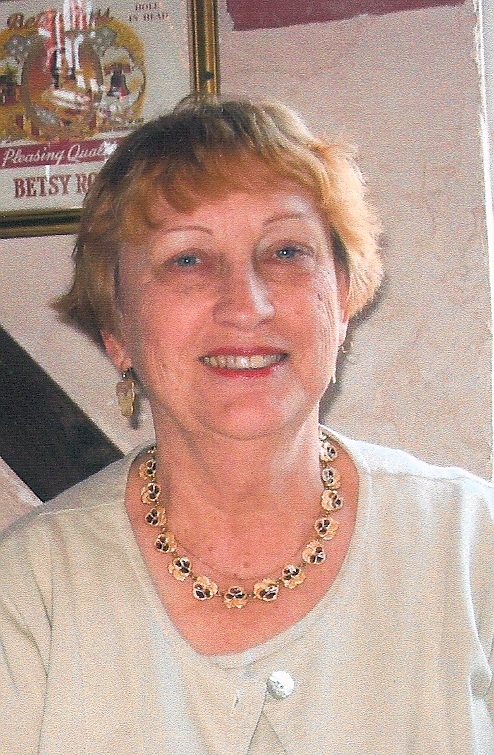
Joan McBride: The Coastside’s Best of the Best..Story by Michaele Benedict

Mother Teresa, Jane Austen, Martha Stewart, the Marx Brothers: Joan McBride has a touch of each of them.

Recently, Joan was directing the Coastside Chorale’s weekly Tuesday evening rehearsal at the OddFellows Hall on Main Street in Half Moon Bay. The group is preparing for a special concert to be held in the Hall at 7:30 p.m. on
Saturday, May 24.

After warm-ups and some advice on breath control, vocal placement and phrasing, the Chorale began to practice a piece based on an Ogden Nash poem:

“The cow is of the Bovine ilk.
“One end is moo, the other milk.”

“Oh, don’t say ‘other’,” Joan said. “Say ‘udder’.”

And of course the choir cracked up.

With an age range of 14 to 80, the community chorus has featured humorous selections as well as classical repertoire and show tunes in their concerts over the past two years.

Joan sang with the 50-year-old group for a while when she, her husband and three children moved to the Coastside from Kansas in 1976. In the fall of 2006 Joan took over from Kay Raney as director.

After more than 25 years of teaching Special Education classes at Half Moon Bay High School, Joan retired from the Cabrillo Unified School District in June 2006—for a few months. She now teaches five subjects at the men’s county jail in Redwood City, preparing inmates for their General Education Diploma (GED). She directed the prison choir for a Christmas program this year.

Joan was a church music director in Half Moon Bay for 28 years, starting with a few singers and eventually counting five choirs and a bell choir. Under her direction, the church choir not only sang service music every week, but performed major choral works such as the Mozart Requiem, the Mozart Coronation Mass, the Rossini Stabat Mater, Rene Clausen’s “A New Creation”, Bach cantatas, the Faure Requiem, and even Andrew Lloyd Webber’s “Joseph and the Amazing Technicolor Dreamcoat”.

At community Christmas carol sings, Joan usually conducts participating Coastside church choirs and the audience in the Hallelujah chorus from Handel’s Messiah, as she did the past two Decembers.

Joan has been singing all her life. She was born in Belleville, Illinois, and sang for community organizations and events all through high school. When she auditioned for the music department at Milliken University in Decatur, Illinois, she was granted a full scholarship to study music. Meanwhile, Dick McBride, who had lived on the same Belleville street when and Joan were children, was attending Milliken on an athletic scholarship.

The couple celebrated their 50th wedding anniversary on Dec. 17, 2006, with a dinner at Caddys (formerly Mullins Bar & Grill) attended by family, friends and some of the original wedding attendants. Joan sang the couple’s favorite song. Dick sits in the tenor section, and acts as librarian for the Coastside Chorale. He is a part-time marshall at the Half Moon Bay golf links.

“All my children are musicians,” Joan says.

Her eldest, Kris Ann, a physician in Seattle, played saxophone with the University of Southern California Trojan marching band, and now plays piano for her church, as does her son, Joan’s teenaged grandson Christopher.

Second daughter Kim, a lawyer, was a flute player who also sang in the church choir. She lives on the Coastside with her two daughters.

The McBrides’ son, Kelly, played oboe in high school, but traded his oboe for a saxophone and a carburetor when he went to college. He raced sports cars, and working on one was the cause of his untimely death in 1993.

Since her own college days, Joan has been a member of Sigma Alpha Iota, an international honorary music fraternity whose mission is to encourage, nurture and support the art of music. The organization gives scholarships, awards and student loans and furnishes music and instruments for special needs music students. It provides a cottage at the famous MacDowell Colony in New Hampshire for musicians who wish to study and work there.

Joan McBride has made a difference and is still making a difference in the lives of many students and singers, but somehow she also finds plenty of time for home and family. She taxis granddaughters to lessons and activities, cooks spectacular meals, makes award-winning quilts, reads voraciously and even builds doll houses.

The Coastside Chorale’s next concert will be at 7:30  P.M. Saturday, May 24, at the Odd Fellows’ Hall, 526 Main Street, Half Moon Bay. Sponsored by the Cabrillo Adult School, the group is open to anyone who likes to sing. For information, telephone Mrs. McBride at 650-726-9266.

—————————

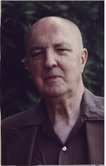
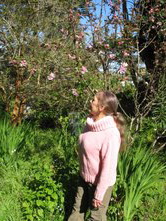
Michaele Benedict, seen here with her dwarf crabapple in full bloom,

is a noted musician and the author of this article. She will be the group’s piano accompanist on Saturday, May 24. Michaele’s latest non-fiction mystery is called “Searching for Anna.” For more information, click here.

Comments off

Montara’s Michaele Benedict, author of, “Searching for Anna,” Tells the Story of Richard Brautigan’s Unique ‘Mayonnaise’ Library

Follow Author Richard Brautigan’s lead: Tell your own story.

And Michaele asks, “Did the famous Brautigan “Mayonnaise” Library make it to its new home at the Presidio branch library in San Francisco?…… Whether or not the collection actually made it, I have not been able to find out, despite many inquiries and phone calls to the Presidio Library.”

Telling Your Story

hulk.jpgStory by Michaele Benedict

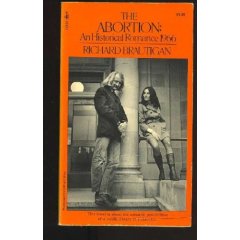
In his novel The Abortion: An Historical Romance 1966,

51y0ybjv1l_aa240_.jpg

Richard Brautigan wrote about a library where anyone with a story to tell could write it out and put it on the shelves for others to read. The overseer of the library, which was open 24 hours a day, lived there. The fictional library was based on the Presidio Branch of the San Francisco Public Library,

Inspired by Brautigan’s idea, in 1990, the Brautigan Library was founded in Burlington, Vermont, by Todd Lockwood, a Brautigan fan, together with poet Robert Creeley and Brautigan’s daughter Ianthe..

Instead of the Dewey Decimal System, used by most libraries, the Brautigan library categorized its books according to the Mayonnaise System, referring to the fact that the library in the novel used mayonnaise jars as bookends.

images.jpgimages.jpgimages.jpgimages.jpgimages.jpg

My unpublished novel, The Dioscuri, registered with the Brautigan Library on May 25, 1990, was given the Mayonnaise catalog number LOV1990.05.003. The 325 books of the Brautigan Library archive (which included Brautigan’s typewriter) traveled to Seattle for a book fair, then back to its basement home in Vermont. It changed addresses in Burlington a number of times, finally winding up in the public library.

In 2005 the Fletcher Free Library in Burlington decided it would be fitting to ship the collection to the Presidio branch of the San Francisco Public Library. Whether or not the collection actually made it, I have not been able to find out, despite many inquiries. The last posted information about the move was a 2005 story in the Boston Globe.

What I wanted to talk about, however, was not the Brautigan Library 3.jpg itself but rather the idea behind a library where everyone could tell his or her story, without the assistance of agents, publishers and editors. True, there is the Internet. But not everyone has access to a computer, and some people still like the idea of something written on paper.

I spend at least four hours a day writing at the computer, mostly for fun these days, though occassionally I will send something off to a magazine, and once in a while something will be published. I am a hundred pages into Murder at the Parthenon,? a mystery novel set at a Tennessee newspaper in 1954. Certainly this effort is spurred by the love of the old newspaper technology, with its Linotypes and locked pages. I meet regularly with a writer friend so we can toss ideas back and forth, and nag each other about keeping our noses to the grindstones.

I am working on a biography of the pianist and Teacher, Egon Petri, part of which has appeared in magazines and on a piano pedagogy website originating in Finland, of all places. I am editing a wonderful work in progress by a friend who wants to tell her story about meditation. And I am proof-reading an exquisite collection of songs by a composer friend.

There is a modern facility which somewhat resembles Richard Brautigan’s library. My nonfiction mystery, Searching for Anna, promo_2005085.jpg was published in February by Lulu.com. Lulu is an international print-on-demand publisher, some of whose thousands of titles strongly evoke those of Brautigan’s fictional library, such as “Growing House Plants By Candlelight?.

Anybody can tell a story on Lulu. For a small fee, a book can even get an ISBN number and be entered into Books in Print, which means it is available through outlets such as Barnes and Noble and Amazon.

Everyone has a story. Jung said that in most disassociated “normal? living, one’s story was often interrupted. He said psychology’s primary function was to retrieve that story and reunite the individual with it.

One of the best pieces of writing I ever encountered was by a Skyline College student who had brought his essay to the Tutoring Center, hoping for help with his English. The story, laboriously written in longhand, was about how to wash dishes. The student’s grandmother had taught him the proper way to wash dishes, and in the telling of the story, the student revealed himself: Loving, respectful, obedient, attentive to detail, humble. The language was awkward, but the story was truly touching.

How to tell your story: Hemingway said to place the seat of the pants on the seat of the chair and move the hand from left to right, or something to that effect.

I would add a bit about spelling and grammar, but it really seems to be mostly about having
something to say, saying it as honestly as you can, and then hoping somebody reads it and understands what you meant.

———-

Author Michaele Benedict lives in Montara. To read Mikie’s “Searching for Anna? website click here

“Searching for Anna? tells the heartbreaking story of Michaele’s search for her beautiful young daughter, snatched from her Purisima home in the early 1970s. For info and to purchase the book, please click here. Email Michaele: mlbenedict@att.net

Comments off

Now You Can Read “Searching for Anna” by Coastsider Michaele Benedict

Montara’s Michaele Benedict’s long-awaited book, “Searching for Anna,” was published today.

promo_2005085.jpg

Searching for Anna” tells the heartbreaking story of Michaele’s search for her beautiful young daughter, snatched from her Purisima home in the early 1970s.

For info and to purchase the book, please click here

Email Michaele: mlbenedict@att.net

Comments off

Chickens Are More Like People Than You Think: Story by Michaele Benedict

CHICKENS ARE MORE LIKE PEOPLE THAN YOU THINK:

Story by Michaele (Mikie) Benedict***

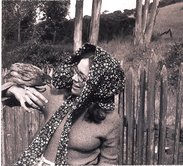
hulk.jpeg (Photo: Michaele with friend “Hulk.”)

Jane Goodall had chimpanzees, Dian Fossey had gorrillas, Steve Irwin had crocodiles, and Suzanne and I, had, well…. chickens.

In 1972, we two city girls took over a ragged little flock in Purisima Canyon: Captain Crunch, the rooster, and his harem of white leghorns, Rhode Island reds, an Araucana and a few belligerent Silkies.

Since we (like the novice Jane with her chimps) had little experience with the animals, we were more interested in chicken behavior than with practical matters like eggs, though we did get a few eggs when the weather was good, and the girls weren’t molting or trying to hatch chicks.

We kept a daily journal about our hen house. We bought laying mash from Feed and Fuel on Main Street in 50-pound bags. We raided the Alpha Beta dumpsters for limp lettuce.

The chickens taught us all sorts of things. A good rooster, we learned, is gallant, the official word for a desirable trait in the male. He will not only strut around and cock-a-doodle at first light. He will find tidbits for the hens and stand aside while they eat.

In fact, one problem with especially gallant roosters is starvation. Roosters use a special sound, a soft “buk-buk?, which is used to call the hen’s attention to something yummy. (A hen with chicks uses the same call: “Here’s a goodie, my dears.?) A gallant rooster will fight off predators—often to the death.

A gallant rooster, we discovered, would even teach a young hen how to make a nest, jumping into the nesting box, arranging the straw, sitting on nonexistent eggs and looking catatonic. Which is how the hens appeared when the urge to become mothers came over them. If one hen went broody, they all wanted to go broody.

To our horror, we discovered that hens know when an egg is not viable or may hatch out sooner or later than the rest of the clutch. They will get rid of the egg one way or another, usually by pushing it out of the nest so that it breaks.

Roosters will also fight rivals, which is why we had a problem when the hens started raising families. As soon as the scrawny adolescent youngsters began to practice crowing, they would be set upon by their father.

We also discovered that the proprietor of George’s Toggery on Main Street in Half Moon Bay was happy to take young roosters off our hands, presumably for roasting. We delivered the quiet victims in burlap bags and tried not to think about it very much. At any rate, we neither had to slaughter those roosters ourselves nor watch them be hounded by the Alpha Male.

The children’s story about the hen that cried “The sky is falling! The sky is falling!? was surely written by someone who actually knew chickens. Chickens are, of course, easily alarmed and deserving of the name for cowardice. They can put out the most terrible racket over any threat, real or imagined…

BAWK! BAWK! BAWK!

…and, they actually have a vocalization sounding something like “Awk? to alert each other to anything flying overhead, hawk or airplane. Since chickens can’t see in front of their beaks, they will comically turn their heads to watch the sky with one eye and then the other.

The pecking order is as unyielding as a catechism, and the chicken at the bottom not only gets pecked by every one more highly ranked, but also has to be the last to eat. A flock without a rooster will come under the protection of the dominant hen, who may even try to learn to crow.

In 1972, Feed and Fuel dispensed veterinary advice as well as baby chicks, straw, oyster shell and grain. When the flock came down with scaly leg mite, someone at Feed and Fuel advised mixing snuff and sulfur with Vaseline and applying it to the chickens’ legs. It wasn’t easy to catch the girls, upend them and smear their legs with this vile stuff, but it did cure them.

Most of the girls had names: Shasta, Paloma, Bruna, and the Rhode Island Reds, Mao, Trostkina and Lenina. We ordered more chicks from a firm that guaranteed their gender (female, after George’s Toggery closed), and they arrived by mail, a loud little yellow crowd in a box no larger than a shoebox.

Commercial operations calculate the ratio of chicken meat or eggs to the amount of feed given, and they usually slaughter the chickens after only a year or two. Our chickens mostly died of old age, however, and did so from the last ranking (most pecked) up.

My last chicken, which had once been the dominant hen, finally died when she was nine or ten years old. I found her down in the coop, stone cold with her feet in the air, just like a cartoon chicken. She might have died of natural causes, but I always thought she
died, because, being the last of the flock, she had nobody left to peck.

———————

***Michaele Benedict’s beloved daughter, Anna vanished from her Purisima Creek home in 1974. Please visit Michaele Benedict’s (searchingforanna.com website)– click here

Comments off

Mikie Benedict’s Montara: Never Cold at “Johann Sebastian” Scranton’s Cold Comfort Farm…

Story by Mikie Benedict

richard10.jpg

(Photo: Richard Scranton, courtesy Mikie Benedict)

Richard Scranton, known to some of his music-making acquaintances as Johann Sebastian Scranton, lived in a little green house in Montara with a sign over the door: “Cold Comfort Farm?.

Richard’s ultimate desire was to hand-copy and arrange all 371 of Johann Sebastian Bach’s harmonized chorales so that they could be played on the keyboard. Before Richard died at the age of 75 in 2004, he managed to complete this enormous effort. He called his handwritten manuscript the Ill-Tempered Clavier, a takeoff on Bach’s encyclopedic work, The Well-Tempered Clavier.

richards-chorale.jpg

(Image: Richard’s Chorale, courtesy Mikie Benedict)

In the front room of Richard’s house on George Street was an instrument which resembled an 18th-century harpsichord, but which on closer inspection proved to be two modern keyboard synthesizers set into a
harpsichord case so cleverly covered with wood-grain paper that it truly fooled the eye.

Richard made digital recordings of his self-taught keyboard playing on this wonderful machine, sometimes painstakingly inputting the chorales note by note and editing out his mistakes.

The floor of “Cold Comfort Farm” was carpeted wall- to- wall with shag scraps cut and glued in a checkerboard pattern, and the walls were densely hung with Richard’s own skillfully-painted facsimiles of European and Asian masterpieces. He made his own curtains and upholstered his own furniture. It was not cold in Richard’s house: Through an innovation best left unexamined, he kept the temperature at about 78 degrees year round.

Cold Comfort Farm?, an expression from Shakespeare, was the title of a comic novel by Stella Gibbons published in 1932. The book, set in the fictitious village of Howling, Sussex, was made into a film by the BBC in 1995.

Richard Scranton’s past was mysterious. He had a mother somewhere, but had no contact with her. He had a cat, but she died. At some point he had been a barber and trusted no one else to cut his hair, which finally he shaved off. He had traveled to Europe. He had a library-class record collection and knew everything worth knowing about all kinds of music. He had been a custodian at a local school for a while.

Although he was gentlemanly and courteous to his neighbors, he preferred to be alone most of the time. He cooked for himself in an electric skillet. He
sometimes rode a motorcycle or a bicycle, but did not drive a car.

In late summer of 2004, his neighbors and a handful of acquaintances held a musical memorial service for Richard at Cold Comfort Farm. The building is now used as a studio by the owners, who live next door.

———————————-

Mikie Benedict’s beloved daughter, Anna vanished from her Purisima Creek home in 1974. Please visit Mikie Benedict’s (searchingforanna.com website)– click here

Comments off

1972-73: The Story of “Farmers’ Feed,” the Coastside’s Food Co-Op by Michaele Benedict


The Story of “Farmers’ Feed: by Michaele Benedict***

In 1972 and 1973 dwellers “in the boonies near and about Half Moon Bay, California? formed a food club which they called Farmers’ Feed. Members published a slender volume, the Farmers’ Feed Book, whose contents included recipes and articles on beekeeping, homemade animal feeds, companionate planting, goat-keeping, sprouts, chicken raising, and even a chicken vocabulary.

The introduction to the book said “Farmers’ Feed is a cooperative food purchasing and distributing group whose members live in the country south of Half Moon Bay, California. Almost our only common denominator is our countryness. Some of us are strict organic vegetarians and some secretly indulge in supermarket prepared foods in darkened attics. What unifies us is that we are all ex-urbanites come to roost in the same peaceful rookery. We make our living writing, breeding horses, teaching, drawing, building, filming, planning. This cookbook reflects our diversity. We hope you and your beasts enjoy our country table.?

(Image: Land tithe, courtesy Mikie Benedict.)

The book urged a land tithe: Put back a tenth of what you take from the earth.

Contributors to the book were Suzanne White, Gene Fleet, Bryant Wollman, Valerie Hawes, Toni De Bari, Patrick Kitchen, Laurel Jernigan, Stanley Scholl, Barbara Freeman and Michaele Benedict.

(Image: Bryant Wollman was a member of the Farmers’ Co-op. For many years he lived at rural Tunitas Creek and worked at the post office in Half Moon Bay. He is posing in front of the world-famous magician Channing Pollock’s home in Moss Beach, circa 1979. )

Advertisers and well-wishers were The Abalone Shop, Palace Ranch, Tunitas Glen Gardens, the Great White Whale Company, Hawes Place, Garret Gallery,
Hansel-Freeman Apple Works, the Water Works, Take 313, Ford Sunshine Company, and Ed Johnson, the Agricultural Extension Agent.

Farmers’ Feed members took turns shopping for bulk food items, mostly in Santa Cruz. In fall of 1972, they put on a theatrical production, “The Ballad of Spanishtown Sue?, first at the Hawes Ranch and later at the Bach Dancing and Dynamite Society.

————–

***Author Michaele Benedict lives in Montara. To read Mikie’s “Searching for Anna” website click here

Comments off

Search Your Memories for Anna C. Waters…Somebody MUST Have Seen

Something on January 16, 1973 when five-year-old blonde Anna C. Waters vanished from her Purisima Creek home, south of Half Moon Bay. Anna’s mom, Mikie Benedict is a longtime Coastside resident, now living in Montara near famous Devil’s Slide. Mikie has never given up looking….If you lived in Half Moon Bay, if you lived near Purisima Creek in 1973, please search your memories…you may not realize that what you remember could bring loved ones back together.

Mikie tells me that she has written a book called, “Searching for Anna,” which will be published in 2008.

To read a sample chapter of Mikie’s book click here.

[Photos, Anna at age five and how she might look today]

220_anna_kindergarten_photo.jpg253_acw2007-07.jpg

Comments off

Anna, Where Are You? Web Sleuthers Are Looking For You….

253_acw2007-07.jpgmb-sounion.jpg

Photos: At left, what Anna C. Waters might look like today, [see posts below for more info] and at right, Montara’s Mikie Benedict during a visit to the Greek islands.

I had no idea there was a dedicated group of web sleuthers out there helping to look for the missing. If you want to check out their work on the Anna C. Waters case, click here.

Apologies if I’m wrong, but I believe the head web sleuther in Half Moon Bay is Doug French.

…more coming….

Comments off

More on Montara’s Artists Mikie Benedict & Howard Gilligan

I was looking into the Fine Arts Colony at Montara when I read in a 1900s issue of the “Coastside Comet” newspaper that a cottage called the Van Suppe Poet & Peasant Cottage was for rent. We’re talking about nearly 100 years ago. The man who took the ad out listed conditions: if you wanted to rent the Van Suppe Poet & Peasant Cottage in Montara you had to be an artist.

The contact person in the ad was Chauncey McGovern.

I knew who Chauncey was–I had come across the locally famous handwriting expert’s name while researching the unsolved murder of wealthy Sarah Coburn in the tiny village of Pescadero in 1919.

The 19th century Austrian composer Franz Von Suppe died in the late 1890s.

I discovered that the Von Suppe cottage still stood and pianist/free lance writer Mikie Benedict lived there. She had inherited the historical home from Howard Gilligan, a unique artist who made Montara his home.

1.jpeg

Above: Harold Gilligan self-portrait, courtesy Mikie Benedict.

…to be continued…

Comments off

1973 Vanishing….Mikie Benedict talks about missing daughter Anna C. Waters…

mb-sounion.jpg

(Photo: Montara’s Mikie Benedict visited Greece in the summer of 2006.)

After the exchange of a couple of emails, Mikie Benedict reminded me that I had written a piece about the historic cottage in Montara where the pianist still lives. That was in the 1990s. Mikie is the mother of Anna [please read post below]–Anna was five-years-old in 1973, the year she disappeared from her home just south of rural Half Moon Bay. She has never been heard from again.

If alive, today Anna would be 40-years-old. Mikie admits that every minute since Anna vanished, since that cruel day in 1973, every angle has been looked at– and looked at again and again.

“I still have no answers,” Mikie said.

What keeps you looking, I asked Mikie.

“…I’m sure many people think I’m crazy to go on looking for her after 34 and-a-half years. However, when a family friend timidly suggested trying some search tactics through the Internet (which of course was not available when Anna disappeared in 1973), I could hardly say, ‘No,’ as difficult as it was to drag out all that again.”

Mikie, an accomplished pianist, told me that while doing some general research, she was excited to learn that the Internet was responsible for six recent reunions in San Mateo County, with now grown-children seeking their birth parents. Why couldn’t it work for me? she wondered.

It’s an old case, and without leads it had gone cold, but now Mikie says the county has reopened it.

….to be continued…

Comments off

January 1973: A Child Vanished From Half Moon Bay…Do You Know Me?

220_anna_kindergarten_photo.jpg253_acw2007-07.jpg

[Photos: L-R Anna's kindergarten pix and how Anna might look today.]

“ANNA CHRISTIAN WATERS, born in San Francisco on September 25, 1967, disappeared from her home on Purisima Creek Road, south of Half Moon Bay, California, on January 16, 1973. The San Mateo County Sheriff’s Office and the National Center for Missing & Exploited Children consider Anna’s case a “non-family abduction.”

“The story of Anna Waters is one of the oldest cases on the records of the NCMEC. An intelligent and effervescent five-year-old, Anna lived in a rural area 45 miles south of San Francisco with her mother, stepfather, and two half-brothers.

“She began kindergarten at Hatch School, Half Moon Bay, in September, 1972. Her mother was an aide in the kindergarten class. On Tuesday, January 16, the school bus dropped her off in front of her house in the early afternoon. Her mother, stepfather and two friends were conversing in the living room. Anna changed into play clothes and went out the back door and into the back yard to play.

“About fifteen minutes later, her mother became uneasy because she heard no sounds from the yard. She went outside and called, and when she got no answer, she called the other adults, who began looking around the farm and calling for Anna. They became alarmed and called the San Mateo Sheriff’s Office, who immediately sent a car, sounded their siren, and joined the search.

“A visitor who said he had greeted Anna as he approached the front of the house was questioned and said he had seen nothing suspicious except a white van carrying an old man and a young man who seemed overly friendly. This visitor joined the search.

“A helicopter crew and divers were called. The divers searched Purisima Creek, which ran behind the property nearby. The family and the deputies continued the search of the grounds and creek until nightfall and posted a watch overnight. In the days following, friends, neighbors, crews from the honor camp, Explorer Scouts and professional fishermen continued the search. The local newspaper called the case “the greatest search in Coastside history.?

Anna’s father, a physician practicing in San Francisco, was questioned and investigated regarding her disappearance, but nothing was found connecting him to the case. Kidnapping for ransom was ruled out when no demands were made.

After divers had explored the three-mile length of Purisima Creek, pulling out and examining every log-jam and barrier, officials stated that they were “ninety percent sure? that they had not missed her, had she gone into the creek. A geologist issued a report on silting and tide patterns, showing that it was next to impossible that no body would be recovered had it gone into the creek.

“Not the slightest clue has ever been found to Anna’s disappearance. No article of clothing, no sighting, nothing. In 2005, a family friend decided to take some approaches to the investigation which had not been tried in the days before the Internet. A crime-solving Web site, WebSleuths, opened a Spotlight Case forum which at present has more than five thousand posts with almost a quarter of a million page views.”

For more info, please click here

…to be continued…

Comments off