Archive for Coastside History

St. Matthew’s Land by Coastside artist Galen Wolf (Part I)

st-matthews-land.jpg

“St. Matthew’s Land” by Coastside artist Galen Wolfe written to accompany a series of paintings of Peninsula landmarks on display at the San Mateo Library in 1961.

Part I

St. Matthew’s land is San Mateo County.

A county is more than a political subdivision, more than its acres and population and improvements.

It is always, and foremost, a great human story. The eventful lives of its people, the legends and traditions, make the tale, make the rich personality of this land.

Unlike the Sierra, San Mateo County had no gold and little traffic in six guns. [I have never heard of this term, "six guns." Anyone know?] But to offset the brash and rowdy thrill of this hectic and short-lived world, our county has a history more than twice as long. And far more varied.

It roughly divides into two parts, each looking over a century. The first was passed in the tranquil sleep of the Spaniard. The second awoke to the accelerating pace of an American state.

Years before the shots at Lexington were fired, the tiny hooves of mules were trudging ankle deep in the alluvial dust of the peninsula. They tinkled in the stony dry creek beds.

El Camino Real was being etched by these patient hooves, a road that was to be the ribbon of life in California for a hundred years. And in the county which became, for another hundred years. Amid changes inconceivable to the humble cavalcade of its beginning.

…to be continued…

Comments off

Dear John

Dear John,

Yes, there were two restaurants. “Frank’s” in Moss Beach, overlooked the Fitzgerald Marine Reserve, the beautiful reefs you speak of. The other was pink in color and stood a mile or so from the foot of “Devil’s Slide,” that dangerous but breathtaking slice of roadway, “a little Big Sur,” that separates Pacifica and San Francisco from the Coastside.

Frank Torres owned both restaurants. Frank’s son, whose name eludes me, did operate the one in Moss Beach for a time. Unfortunately oldtimers report he died youngish of imbibing too much.

Frank’s has gone through several sets of ownership since Mr. Torres death ( he was rumored to have been a power during Prohibition). It’s now called the Moss Beach Distillery and the former roadhouse is publicized as the home of the “Blue Lady,” a ghost who roams about at night. You get the idea.

The other Torres restaurant, the pink one, was torn down (but leaving one wall to satisfy the Coastal Commission’s rules) and replaced by the very modern, sort of abstract-ty Chart House restaurant which changed management several times before suddenly closing down a year or so ago. The empty building overlooks a spectacular view of Montara beach.

The reefs you recall (at Moss Beach, where the Distillery is located)l are as breathtaking as ever–but now there is a new element. A local young surfer named Jeff Clark “discovered” a fantastic surfing cauldron that is called “Mavericks,â€? and is NOT named after Clark’s dog as is sometimes said.

When conditions are ideal, the waves are enormous, sometimes as tall as a six-story building– and Maverick’s is now listed as one of the best surfing venues in the entire universe–and the yearly contests where world-class surfers are summoned when the waves are awesom–draw thousands upon thousands of observers and fans to the little fishing village of Princeton.

In recent years so many people have come to view the surfing contest that there are rumors of banning the hordes because the landscape is so fragile, lots of erosion. One plan is to have the public watch the surfing events on closed circuit tv at the old Candlestick ballpark in S. San Francisco,

Princeton, which borders the airport you remember so well, is also adapting to changing times.. A large hotel and indoor mall is being built. I don’t mean to give you the idea that this a city -size hotel and mall; it’s not, but it’s big enough for us Coastsiders.

The airport is still home to pilots learning to fly and other small aircraft bringing visitors to the Coastside, perhaps to play golf at the pretty Ritz Carlton Hotel, south of Half Moon Bay. Or to wind surf, kayak or hike to the peak of glorious Montara Mountain—and drink in the Coastside’s natural beauty.

Yes, during WWII the airport was also a training sites for the Women’s Army Corps (WACS) and I have some extraordinary photos of them on my site–and there are pictures of many of the other places you speak of.

In the 1950s the airport hosted drag strip racing featuring big stars like “Big Daddyâ€? Don Garlits–there is a photo of the racing superstar at the airport—the surroundings might bring back warm memories.

On April 29 the annual “Dream Machine” extravaganza is being held at the HMB airport–all kinds of cars, fully loaded, weird and fancy. Other types of incredible machines. We didn’t have the Dream Machine show last year because Devil’s Slide fell in and we were dependent on one road only, two-lane Highway 92.

Sounds to me like you’re ready to re-visit those exciting images of your youth.

June
Comments off

Map Of The Coastside Ranchos..

Hope the image isn’t too tiny–you can always go to the San Mateo County History Museum in Redwood City and look at the same map of a much larger size…

Mapranchos.jpg

Comments off

A Coastside Cave Sheltered The Outlaw Pomponio: Part IV

The frustrated soldiers waited in vain for the rebels to strike but the attack never came. Infuriated, they frantically renewed their hunt and Pomponio withdrew to the safety of the cave at the headwaters of Pomponio Creek, south of San Gregorio.

The crafty Pomponio must have felt secure knowing that the soldiers wearing standard issue uniforms and heavy boots were not prepared for the rugged terrain. This remote part of the Coastside was uncharted–and did not lend itself to an orderly field of battle.

His pursuers would lose their footing, slip and fall as they tried to climb the precarious layers of rock that led up to Pomponio’s hidden lair. In the unlikely event they did reach the cave, Pomponio and his men would be waiting for them, armed with weapons stolen on their raids.

(The Coastside was so isolated that not until 1850 did the famous Johnston brothers from Ohio distinguish themselves by being among the first to navigate wagons over the Coastside’s mountainous barriers. They used an ingenious rope system to gingerly lower their wheeled vehicles down the steep slope.)

But Pomponio’s luck was running out. Perhaps his youthful illusion of immortality led him to become sloppy. It was only a matter of time before his bravado would bring him down.

…To Be Continued….

Comments off

A Coastside Cave Sheltered The Outlaw Pomponio: Part III

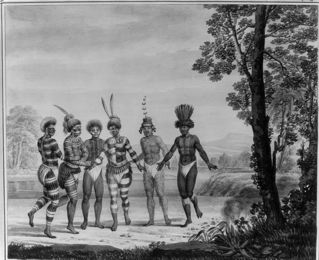
Indians2.jpg(Photo: Indians at mission in San Jose)*

Pomponio’s pursuers, Spanish or Mexican soldiers, must have believed that the fugitive Indian was dead, perhaps killed by grizzly bears or mountain lions that roamed the hills near Half Moon Bay. Visibly relieved, they pushed Pomponio out of their minds. He was forgotten and good riddance.

The soldiers had ceased looking for him when, one day they received a disturbing report of a raid on a Pacifica ranch. It sounded suspiciously like the work of the notorious Pomponio. Their worst fears were realized when eyewitnesses confirmed it was Pomponio and his gang, who had swooped down on the ranch and seized horses and supplies.

Once again the crafty Pomponio had slipped away.

Although Pomponio was ordinarily secretive–his success had made him careless. He started to confide in people whose loyalty he could not be certain of. A few traitorous Indians who had pretended to be sympathetic were actually employed as listening posts for the authorities.

When one of these deceitful fellows learned of Pomponio’s plans to raid a ranch near San Jose, he alerted the missionaries who set in motion a trap for the wanted outlaw. But in another twist, Pomponio, using his own spies, learned of the betrayal and altered his strategy by forgoing the raid.

*Photo: San Mateo County History Museum. Please visit the new galleries at the museum in the historic Redwood City Courthouse.

…To Be Continued…

Comments off

Rancheros Sought Safety On The Coastside (1840s) Part V

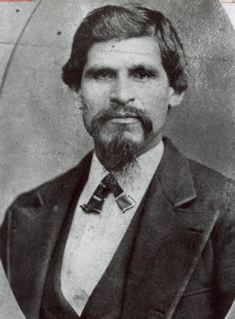
bandit.jpg(Photo: The bandit Tiburcio Vasquez, whose uncle by the same name, owned the Corral de Tierra, stretching from Miramar to Half Moon Bay).

The Coastside was so isolated that the bandit Tiburcio Vasquez could visit his uncle on the remote Corral de Tierra without fear of being arrested by the authorities. He was finally captured in San Jose. The sheriff printed invitation announcing his execution on Friday, March 19, 1875.

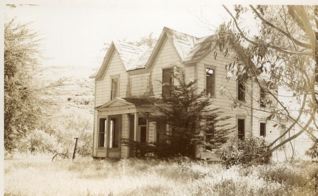
GuerreroHse.jpg(Photo: Guerrero Farmhouse, later a hotel, Montara)

Francisco Guerrero continued to spend a great deal of time in San Francisco. In 1850, he was murdered as he stood near the corner of Mission and 12th Streets. The fatal injury occurred when a man stalking him on horseback struck him in the head with a slingshot.

On April 12, 1863, as the ranchero Tiburcio Vasquez sat near a window at a Half Moon Bay saloon, a volley of gunshots rang out. When the dust cleared, Vasquez was declared dead–and the murderers escaped.

It was later reported that there may have been a connection between the Guerrero and Vasquez murders. They had appeared as prosecution witnesses in an infamous land fraud case.

Although Candelario Miramontes did not live to see the outcome of the U.S. war with Mexico, all of his daughter Carmelita’s children were born in the adobe house on Mill Street in Half Moon Bay.

Descendants of these famous early Spanish families still thrive throughout California. Coastside street signs and geographical landmarks carry their names, a constant reminder of Half Moon Bay’s Spanish heritage.

Comments off

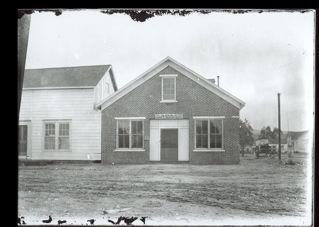
Bank of Half Moon Bay

hmbbof.jpg

Photo: courtesy Spanishtown Historical Society, the SHS operates a small museum on Johnston St. Check with the HMB Chamber of Commerce for the schedule.

Comments off

Rancheros Sought Safety On The Coastside (1840s) Part IV

J-Hse.jpg(Photo: The Johnston House before it was restored. The historic house is open to the public–check with the HMB Chamber of Commerce for the schedule).

Few, if anyone, had managed to maneuver wheeled vehicles of any kind over that mountainous barrier. But the Johnston brothers perservered and triumphed over the geographical obstacles by gingerly lowering the wagons with ropes.

Half Moon Bay’s Spanish-speaking residents welcomed James Johnston and his Spanish bride, Petra. He further ingratiated himself with the locals by constructing a real American house, a “saltbox-style” farmhouse that was used as a social gathering place for Spanish and American guests.

Known as the “White House of Half Moon Bay”, the landmark has been beautifully preserved by the Johnston House Foundation.

Miramontes’ adobe house–where his midwie daughter, Carmelita lived after her marriage to Francisco Gonzalez, a ranchero’s son from Pescadero–stood on Mill Street, east of Main in Half Moon Bay. Tiburcio Vasquez built his five-room adobe on nearby Pilarcitos Creek and Francisco Guerrero erected an adobe on a hillside northeast of Princeton.

But it was Vasquez and Guerrero’s huge Corral de Tierra that evoked notions of the romantic Spanish past. Round-up time was the occasion for festive rodeos lasting for days. It was time for celebration. There was feasting and music as the vaqueros vied to prove their superior horsemanship.

While they enjoyed the competition, the vaqueros still had business to do. They lassoed cattle chosen for slaughter, branding the other animals and releasing them to roam for another year on the Corral de Tierra.

bandit.jpgThe “bandit” Tiburcio Vasquez, not to be confused with the ranchero by the same name.

On one of the happy occasions at the Corral de Tierra, a member of the Miramontes family wa shocked to see the mischievous bandit Tiburcio Vasquez, the ranchero’s nephew. The young bandit reflected the darker side of relations between the Mexicans and their new neighbors, the Americans. This Vasquez thirsted for revenge, scouring the countryside stealing horses and robbing stagecoaches.

Photo: courtesy San Mateo County History Museum. Please visit the museum at the historic Redwood City Courthouse in Redwood City.

…To Be Continued…

Comments off

Rancheros Sought Safety On The Coastside (1840s) Part III

< miramontes.jpg

"The rancheros felt safe but life did not go smoothly. While Miramontes, for example, maintained excellent relations with Vasquez and Guerrero, he had trouble with Jose Alivso, his neighbor to the south--the grantee to the Rancho Canada Verde y Arroyo de la Purisima.

Miramontes and Alviso were feuding over a narrow strip of land located between the two ranchos. Perhaps the problem could be traced to the original crude maps that were unclear.

Both men claimed it but only Alviso erected an adobe on the property.

There were angry confrontations and showdowns. Miramontes often complained that Alviso drove his men off whenever they came to work the land. Alviso made similar charges. [The disagreement was finally resolved when a court determined that the land belonged to Alviso].

Alviso may have triumphed in the battle over the land but the Miramontes family was prolific and had grown so large that visitors referred to their rancho in Half Moon Bay as the “Miramontes District”.

One daughter, Carmelita, achieved local fame for her medical expertise as a midwife.

Some Americans squatted on the Miramontes rancho, firmly believing the US government would declare the land public domain–but there were others who became “legal” neighbors.

A portion of the Miramontes rancho had been sold to Ohio native James Johnston. Accompanied by his two brothers, the Johnstons heroically crossed the plains, mountains and deserts only to face the toughest obstacle of all.

The Johnston Brothers had no idea how they were going to drop down from the Santa Cruz Mountains into the beautiful Half Moon Bay Valley.

….To Be Continued…

Comments off

Rancheros Sought Safety On The Coastside (1840s) Part II

The boundary line between the two ranchos was Medio Creek, which runs through present-day Miramar, later the locatio of a busy 19th century wharf were steamers docked.

Guerrero and Vasquez were acquainted with Candelario Miramontes. When Miramontes applied for a 4,424-acre rancho, the crudely drawn map included the present-day town of Half Moon Bay. Miramontes named his rancho ‘San Benito’ and that was what Half Moon Bay was called for decades.

Before the war erupted between the US and Mexico in 1846, the rancheros were absentee landlords. Cut off by insurmountable geographical barriers with no passable roads, they found little to attract them in Half Moon Bay. Compared with the Coastside, San Francisco wasw a busy hamlet–but Miramontes was able to grow corn, peas and potatoes near what is now the downtown area.

The Mexican-American War turned the ranchero’s lives upside down. They were now threatened by the growing American influence. Just as resentment against Spanish rule produce the renegade Indian, Pomponio, the mounting friction between the Mexicans and the Americans who challenged them, created the notorious bandit, Tiburcio Vasquez, a counterpart to Pomponio.

Coincidentally, the outlaw Tiburcio Vasquez carried the same name as his respectable uncle, the owner of the Corral de Tierra. But the unruly nephew was to become a folk hero, a Mexican version of Robin Hood. Some said Vasquez was driven to his outlaw existence by the manner in which the Americans treated the Mexicans as inferiors while dancing with their women.

As the US war with Mexico neared, Guerrero, Miramontes and Vasquez made the life-saving decision to flee San Francisco for their adobe houses near Half Moon Bay. In the late 1840s, about 70 people, including local Indians, comprised the entire population of the Coastside, according to the archives of the San Mateo County History Museum in Redwood City.

Comments off

Rancheros Sought Safety On The Coastside (1840s) Part I

rancho1.jpgrancho2.jpg Photo: Rancho Corral de Tierra, courtesy San Mateo County

The Coastside rancheros found San Francisco a dangerous place to live in the 1840s.

Political turmoil permeated the air–the United States was preparing for war with Mexico–and California was the ultimate prize. As part of the Mexican regime, the rancheros–Francisco Guerrero, Candelario Miramontes Tiburcio Vasquez–were vulnerble and feared for their lives. So they sought haven on the Coastside where enemies would be unable to find them. The Coastside was so remote tht only the mountain lions could track them.

California had already weathered a change of rule as the baton of power was passed from Spain to Mexico. Now, as Americans moved in, a more significant cultural and political change was on the way. This was the setting on the eve of the Gold Rush that brought hoards of Americans to the Golden State.

Guerrero, Miramontes and Vasquez knew one another–they had been stationed in San Francisco under Mexican rule. But most likely it was Vasquez who knew the secret route into isolated Half Moon Bay. He had been the supervisor of Mission Dolores’ livestock and ws familiar with the Corral de Tierra, a 7, 766-acre piece of breathtaking grazing land stretching from Montara to Half Moon Bay.

The Corral de Tierra was so named because the terrain formed a natural enclosure.

Guerrero, Miramontes and Vasquez shared much in common. They had witnessed the dismantling of the harsh
Spanish mission system under which so many Indians had perished. They benefited from the demise of this system as loyal military officers and other deserving individuals were rewarded with tracts of land known as ranchos.

Vasquez applied for and received the southern portion of the Corral de Tierra. Francisco Guerrero, who had held various political positions in San Francisco, also applied for and received the northern section of the Corral de Tierra.

….To Be Continued…

Comments off

Bellvale Was A Teeny Tiny “Town” Four Miles West Of La Honda

And in the late 19th century the local kids walked through the giant redwoods to attend school there.

The town’s gone now but here’s what the very rustic post office looked like:

Bellevale.jpg

During the warm summers the kids played in the old swimming hole–but I must admit the water can’t be that comfortable because it looks like at least one of the kids is freezing!

Bellvale2.jpg

Comments off

“Coastland” by Galen Wolf (Part VI) 1885 (Conclusion)

coastland5.jpg

“The pier at Amesport is one thousands feet long. Here at the double warehouse Wm. Mullen greets you, the loads are weighed. The low cars roll slowly down the grade of the wharf. A steady horse immune to the scare of breaking waves beneath, follows the cart to draw it back.

“Other wagons come from the north. From the ranch of Guerrero, at the foot of Pedro Mountain. The Burkes come in. Deany, Draffen, Dennison, John Kyne, Murphy. There will be a load for the little steam schooner rolling at her anchor fifty feet beyond the pier.

“The donkey engine clanks. The slings lift high. Your potatoes appear on the deck of the schooner. The men work fast, to clear the way for the waiting boats.

“You shake hands with John Mullen, with Ring and Casey.

————————————————————————————————————————

“It is too late for the stage. You walk along the cliffs south of town to pass the afternoon.

“Godetia and wile aster and clean shining strawberrries garden the banks. A rich, drowsy smell comes from the new mown hay, and it is spiced with tarweed. You breathe deeply.

“The beaches far below are swept clean as carpets. Gulls float by. At sea the murres are flying in an endless phalanx from south to north. This will go on all day.

“In the bay a whale breaks the surface. The cry of sea lions comes from the Sail Rock of Pillar Point.

“Over the sky a silver veil has crept. The hay fields are a dusty gold, and the half seen hills a soft and smoky blue. The sea breaks with a hollow sound and the sea birds scream.

“To the west a grey shape passes. It is no doubt the steam schooner. But it could be anything. The ghost of a ship that had lost its way in the fog and wrecked. Now its whistle blows, a voice hoarse and unbelievably wild.

“In the hay field a horseman is riding. No particular somebody. But in the glorifying light, and in your wish, it is Pablo Vasquez on the golden pony.

Pable2.jpg

(Pablo Vasquez and his golden horse).

“For a spell has been about you since first you glimpsed the coach in San Mateo. The magic reaches you now with great force. There is no distinction of time remaining. Either of the day or of the year. The gentleness of the land has overcome you. Here is the long sleep. The long dream.

“You will carry some of this back to the busy city streets. You will carry a bit of it all your life. For the dream is fadeless, the heritage of those who know and love this land.”

Note: “Coastland 1885″ by Galen Wolf was published to commemorate the 90th anniversary of Levy Bros, founded in Half Moon Bay in 1872.

Comments off