Archive for Beatniks

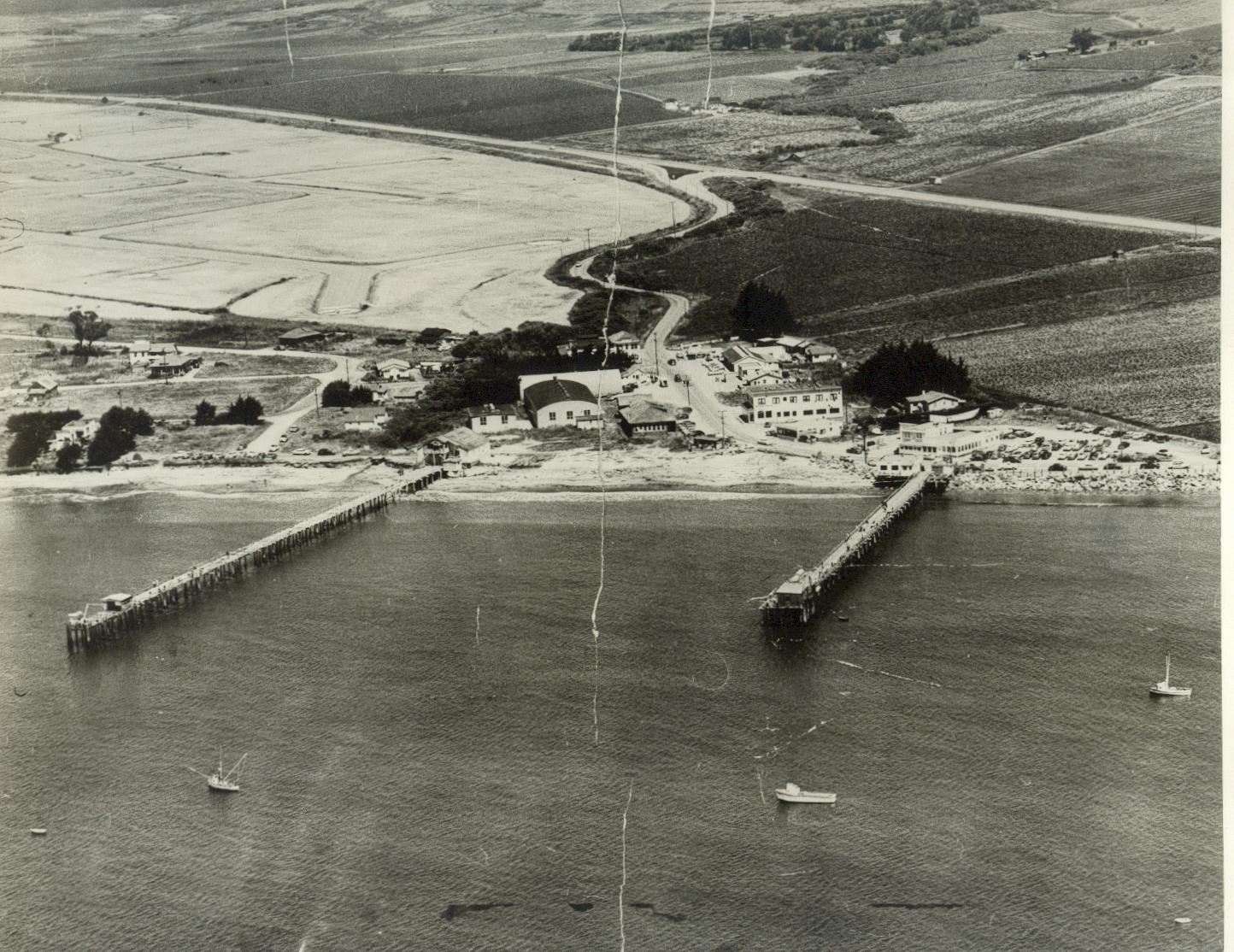
princeton.jpeg

There have been more developments vis-a-vis my “Search for the Beatniks Who Lived In The Abalone Factory At Princeton.”

I’ve heard from the fascinating artist Michael Bowen, the world traveling painter (there is a room in a European museum named after him–Bowen always felt that his art was more appreciated & understood in Europe than in America ) with his young wife and daughter–Michael was my link to Michael McCracken, “the beat leader out at Princeton” (the Modigliani-type painter, as longevity, and perhaps so-called hard-living goes, both, Modigliani & McCracken died before they were 30).

For a little more color, please read this story: http://www.halfmoonbaymemories.com/2006/12/06/1959-when-the-beat-scene-hit-miramar-beach-part-v/

You might recall that years ago, in the 1970s, I started following up on the so-called “beatniks” at Princeton (they sound more like early hippies to me). That took me to City Lights Books in North Beach and poet Ferlinghettic referred me to M. Bowen. I met M. Bowen at one of the cafes in North Beach and he then invited me out to his fabulous home in Bolinas. By fabulous, I don’t mean there were lots of expensive “things” there–but it reminded me of a movie set. I wish I could think of which movie. How about naive writer, out for adventure, risks her life meeting people she doesn’t know, goes to remote house with big pool guarded by two mastiffs.

Michael Bowen had drawn me a map with directions to the Bolinas pad and told me to honk twice at the gate which would alert the two mastiffs and him. It all turned out to be perfectly safe–my instincts were very good.

More on the details of my adventure at the Bolinas house later.

As it turned out, Michael had hung out at the Abalone Factory a lot–but he lived at Tunitas Creek around the time that the big eccentric landowner John Wickett was there, and free spirit types live on his Skyline property where they built treehouses and domes. Michael was an artist–one who had wealthy collectors buying his work. At least one piece was acquisitioned by the Oakland museum and his work is held in some European museums.

Jerry Kamstra, author of “The Frisco Kid” was another artist-in-residence at the infamous Abalone Factory. Before she was famous, Janice Joplin visited Princeton as did the writer Richard Brautigan (”Trout Fishing in America”)….Now I have learned that Allen Ginsberg also paid a visit or two.

I’ll get into more of all this later…some people have questioned whether the Abalone Factory existed because they lived in Princeton in the 1970s and there was no such place.

Okay–Michael McCracken was out at Princeton from about 1960 to 1964. The Abalone Factory, according to prominent attorney Marvin Lewis (now gone), was located way out at the end of Princeton, the last house before you got to the radar station. (But I have now found out where it was located).

These artists were the bigger-than-life types. After meeting Michael Bowen, I can attest to that. (For example, not only did McCracken paint huge huge paintings, he was a huge huge piece of work himself). Bowen, who lived at Tunitas Creek for a time, went on to live with John and Yoko Lennon in England in the late 1960s, hung out with Timothy Leary (and did not take drugs or drink much–Bowen’s thing is and has always been yoga…)

…See my Other Work II & Other Work III for more…
Comments off

Drama on the Internet: My Search For The Beatniks of Princeton Part II

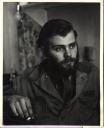
mmc11.jpg (Photo: The artist and beatnik Michael McCracken is as handsome as he was described by the famous San Francisco attorney Marvin Lewis. This is the first photo I’ve seen of McCracken).

Then a few days ago I get this mysterious sounding email from one Michael Rothenberg:

“Imagine my surprise when I did a casual Google search for Michael McCracken San Francisco and you had posted, not 45 days ago, a wonderful reminiscence of Marvin Lewis about my parents!

I was the baby, Michael McCracken Jr, that lived in that delapidated abalone factory, born February 11, 1963.”
——————————————————————————————
June to Michael: I am equally stunned. Tell me more about yourself.
—————————————————————————————————
Michael Rothenberg to June: “Michael Bowen and Arthur Monroe are both my godfathers. I’ve spoken to Michael Bowen and actually came out to San Fran to spend time with Arthur Monroe. Not sure if you know him….he’s a curator at the Oakland Museum and was also an artist “back in the day”.

As for me, I live in Chicago, where my grandmother brought me after my mother died. We were traveling in Mexico in 1966 when my mother overdosed. They placed me with a family in Mexico until my grandmother was able to find me through the Consulate. She was a great person…troubled, but great. She was a wonderful singer that would frequently perform and hang out with the likes of Janis Joplin in the coffee galleries in North Beach.

As for my father, Michael, he died in June 1968 in a London hospital, officially determined a suicide based on the information found on his death certificate I was able to obtain. It’s been an interesting journey for me over the past 9 years, finding out all the information I have compiled.

The website of my search is at www.woodstocknation.org/mccracken.htm along with an article that was written about us that was published in the Miami Herald.

Michael”

There’s a lot more to tell but it’ll have to wait until later. Meanwhile this is a great story and please read the links, including the one Michael Rothenberg, the baby born in the Abalone Factory in Princeton, sent me.

Comments off

Drama On The Internet: My Search For the Beatniks of Princeton, Part II

mmc1.jpg(The artist Michael McCracken, courtesy Michael Rothenberg).

One of the most adventurous stories I pursued in the late 1970s was my search for the beatniks that lived in the old Abalone Factory in Princeton. I was especially searching for the artist Michael McCracken. Where was he? Who was he? What had happened to him?

It all began when Pete Douglas of the Bach Dancing & Dynamite Society told me about Michael McCracken “the beat leader out at Princeton” who suspected Pete because he was a probation officer who also owned the free wheeling Ebb Tide Cafe in Miramar.

Here are the links, 1-5: http://www.halfmoonbaymemories.com/2006/12/05/1959-when-the-beat-scene-hit-miramar-beach-part-i/
http://www.halfmoonbaymemories.com/2006/12/05/1959-when-the-beat-scene-hit-miramar-beach-part-ii/
http://www.halfmoonbaymemories.com/2006/12/05/1959-when-the-beat-scene-hit-miramar-beach-part-iii/
http://www.halfmoonbaymemories.com/2006/12/06/1959-when-the-beat-scene-hit-miramar-beach-part-iv/
http://www.halfmoonbaymemories.com/2006/12/06/1959-when-the-beat-scene-hit-miramar-beach-part-v/

Michael McCracken’s name stuck with me. I had to find out more and turned to the San Francisco poet Lawrence Ferlinghetti, the owner of the famous City Lights Bookstore in North Beach. I wrote him a letter asking if he could direct me to someone who knew of McCracken’s whereabouts. One day I received a message back including the name of the exceptional artist Michael Bowen and a post office box address. That led to correspondence and a meeting with Bowen at his Bolinas residence. Quite an eccentric day.

Michael Bowen said that I should contact the famous San Francisco attorney Marvin Lewis, adding that Lewis had represented McCracken’s wife Carole in a legal case. I followed up and had the most unusual interview which I taped. Here are the links 1-9:
http://www.halfmoonbaymemories.com/2007/01/24/my-search-for-the-beatniks-who-lived-at-the-abalone-factory-princeton-by-the-sea-part-i/
http://www.halfmoonbaymemories.com/2007/01/24/my-search-for-the-beatniks-who-lived-at-the-abalone-factory-princeton-by-the-sea-part-ii/
http://www.halfmoonbaymemories.com/2007/01/24/my-search-for-the-beatniks-who-lived-at-the-abalone-factory-princeton-by-the-sea-part-iii/
http://www.halfmoonbaymemories.com/2007/01/27/my-search-for-the-beatniks-who-lived-at-the-abalone-factory-princeton-by-the-sea-part-iv/
http://www.halfmoonbaymemories.com/2007/01/28/my-search-for-the-beatniks-who-lived-at-the-abalone-factory-princeton-by-the-sea-part-v/
http://www.halfmoonbaymemories.com/2007/01/29/my-search-for-the-beatniks-who-lived-at-the-abalone-factory-princeton-by-the-sea-part-vi/
http://www.halfmoonbaymemories.com/2007/01/30/my-search-for-the-beatniks-who-lived-at-the-abalone-factory-princeton-by-the-sea-part-vii/
http://www.halfmoonbaymemories.com/2007/01/31/my-search-for-the-beatniks-who-lived-at-the-abalone-factory-princeton-by-the-sea-part-viii/
http://www.halfmoonbaymemories.com/2007/01/31/my-search-for-the-beatniks-who-lived-at-the-abalone-factory-princeton-by-the-sea-part-ix-conclusion/

Comments off

My Search for the Beatniks Who Lived at the “Abalone Factory,” Princeton-by-the-Sea: Part IX: Conclusion

Attorney Marvin Lewis (ML): A couple of weeks after that I heard from McCracken.

Michael McCracken (MM): Next Sunday, your painting will be ready. Come and get it.

ML: How do I find you?

MM: Just go to a grocery store in Princeton and they’ll tell you how to get here.

Marvin Lewis (to June): That was a Sunday and I had my Chrysler. I remember, I had just bought it. It was pouring, just a real storm.

Mrs. Lewis to her husband: You’re nuts to go.

ML to his wife: “I can’t reach these people by phone. They’re expecting me. He painted this painting, whatever it is. So I better pick it up.

ML (to June): I drove from Hillsborough over the Half Moon Bay Road, came down to Princeton, went to the grocery store and asked for Carol and McCracken.

Storeowner: Oh, you mean where the beatniks live? He walked outside the store and pointed. You see that promintory that comes out into the water? Pillar Point. That way? Right out on the end is a building, you’ll see its wrecked and they’re living in that wrecked building.

ML (to June) I drove and followed the coastline and went out there. Just as I arrived these great big dogs came running at me. One had red hair and was barking and two guys ran out, including Michael, calling off the dogs.

Marvin Lewis (to June): As I approached the house, I heard loud music playing and chickens were flying all over the place, roosters and goats walking around. There was even a goat inside the “house”. Then when I came inside this large room there were couples copulating all over the floor. I had to step over them.

In the middle of the floor there was a fire going in a brick kiln which they had built for Carol’s baby. Carol married McCracken. He made it legal. There was some guy laying on his back–I think with some gal in his arms and with his bare feet he was rocking the cradle while the baby was crying over the noise of the music and all of the scenes of animals and birds that were flying about in the building.

Michael McCracken (MM): Would you like to see the painting?

ML (to June) I went to see this painting and it was a sexual painting. The two wings were sexual, genital organs. It was a white angel and the rest of the picture was just black, inky black. It wasn’t a picture. It was a mural. It took up the whole wall.

ML to MM: I’m most grateful. I know the work you put into this but I don’t know how to say this–but I just don’t have any office space.

MM: What about your home?

ML: No way. Mostly my house is glass. I don’t have any wall space for paintings. I couldn’t get it in.

MM: I’m terribly disappointed–if you knew the hours I put in on this painting. Would you accept a smaller dark angel?

ML: Yes.

ML (to June) He went and got me a duplicate that was smaller and framed. I got into the car and dogs were barking at me until I drove away. I said goodbye to them and left. That was the last time I ever saw them. I don’t know what happened to the Dark Angle. My wife saw it and she let out a howl.

Mrs. Lewis to Mr. Lewis: My God, what are yoiu going to do with that?

ML (to June) We put it in the basement. Maybe it’s still there. I can’t remember if I gave it to my son or not–but it was something I was sure could have no value. I thought it had absolutely no appeal but I didn’t understand modern painting and I still don’t.

Comments off

My Search for the Beatniks Who Lived at the “Abalone Factory,” Princeton-by-the-Sea: Part VIII

Marvin Lewis (ML) (to June): This puts one way back with a half-hour for the other case. So I got my investigators, four of them.

ML (to investigators): Scour North Beach. Find her wherever she is.

ML (to June) In the meantime Carol’s mother told me that McCracken came home from Princeton and said she wasn’t going to live in any goddamn capitalist hotel any longer. He had taken her to some place in North Beach.

I decided to lock myself in the john…

ML (to his investigators): If you find her you come and get me and I’ll come out.

ML (to June): So at about 9:30 a.m. the judge wanted to know where I was and they couldn’t find me and I heard through the paging system my name being called and I didnt’ come out of the john–so I figured they were going to hold me in contempt.

About ten minutes to ten the investigators came and said they found Carol. She was outside. Carol and Michael had misunderstood. They thought it was ten. McCracken had come and he was with Carol and said not for me to get excited. Everything was all right.

To make a long story short, Carol was acquitted. Then after she was acquitted, the judge did not put her in jail for contempt.

…To Be Continued…

Comments off

My Search for the Beatniks Who Lived at the “Abalone Factory,” Princeton-by-the-Sea: Part VII

Marvin Lewis (ML): I argued the case to the jury and I felt that I had it won. I was very pleased and I explained that to the family.

ML (to the family): You keep her here at the St.Francis, whatever happens.

ML (to me): And the judge said, Tomorrow morning, Ladies and gentleman of the jury, we’re going to instruct the jury at 9 o’clock. I don’t mean two minutes past 9. I mean 9. The reason for that, is while the jury is deliberating, I have another case coming in to start.

Everybody understood.

June: The next day Marvin Lewis received a call about 8:30 a.m.

ML (to June): There was no Carol. I figured there was still some period of time but I was still worried. At 5 minutes to 9, the judge called me into chambers.

Judge: ‘Is your client here? Are you ready to proceed?’

ML: No, she isn’t here, your Honor.

Judge: I’m going to tell you, Marvin, what I’m going to do then. If she’s not here in five mintues, I’m going to dismiss this jury and when she shows up, I’m going to put her in jail for contempt.

ML (to June): The case had taken about 3 weeks. I had it won. It was a marvelous jury and I thought I had done a marvelous job on argument.

Ml (to the judge): Judge, will you let me stipulate that she can be excused during the reading of the instructions?

Judge: Marvin, you know better than that. It’s a criminal case and you cannot stipulate that for her absence.

ML (to judge): You’re right.

Judge: I’ll give you one half-hour–but that’s it.

…To Be Continued…

Comments off

My Search for the Beatniks Who Lived at the “Abalone Factory,” Princeton-by-the-Sea: Part V

Princeton.jpeg

Marvin Lewis (ML): “I said, Don’t worry about my personal life. Don’t concern yourself with it.

Michael McCracken (MM): “Oh, I can make you life a paradise. You’ll have a different woman every day. I have beautiful women. Do you want a blonde? Do you want a redhead?

ML: What is this? Are they for a price? Are they prostitutes?

MM: Heavens no. These are all gals with good backgrounds and come from fine families.

ML: Well, what goes?

MM: Oh, that’s the trouble. I thought you were really with it, but you’re really not. In a way you are, but you’re not completely. The Marvin Lewis that I think I see should have the same mentality as I have and you should have what I’m offering you in every way. You’d have a much fuller life and a much happier and enjoyable life.

Marvin Lewis to June: To me, the idea of him just expecting to sit there and watch me copulate was unbelievable.

So the next week my receptionist said that McCracken was in the outer office and had a gift for me. So I said, ‘Have him come in.’ So he came in with another girl. She sat over there [pointing at a chair] and he said, ‘I want you to meet this girl and I want you [the girl] to meet Marvin Lewis’.

He said, ‘I’ve told everybody over at the beach [Princeton-by-the-Sea] what a fabulous person I find you to be’. And he said, ‘I thought you should have this type of woman in your life.’ So he said, whatever her name was, ‘Go around the desk and ball him’.

You gotta be kidding, I said.

…To Be Continued…

Comments off

My Search for the Beatniks Who Lived at the “Abalone Factory,” Princeton-by-the-Sea: Part IV

P21.jpg

Marvin Lewis (ML): I called [my client] Carol and I said, ‘Carol, please, this young man–I don’t want to tell tales out of school’ — but, she said, ‘Why didn’t you accept this girl? He gives her to you graciously.

ML: Carol, this isn’t my world

ML (to June): Two weeks later McCracken came in with another little girl–same thing. Same–and this time I made it more forceful than ever. Several days later he said he had to see me so he came in to my office.

Michael McCracken (MM): I must have been nuts. I know why you didn’t want these women……You want me!!!!

ML: I don’t want you.

MM: I don’t understand what you do want.

ML: Just don’t worry about it.

ML (to June): Anyway, we went along preparing for the trial. Then they sprung the news on me that he [McCracken] had gotten her [Carol] pregnant. I figured I couldn’t very well bring her in front of the jury. She was starting to show and we got the trial ppostponed until the baby could be born. The baby was born down in Princeton where they moved from North Beach.

Carol said it was hard for them to come into the City. They had to hitch rides in. They’d walk for miles to get to my office. She said it was most difficult to get to where the grocery store was. They had no car and they’d walk along the coast until they got to these little stores in Princeton to buy their food.

They were living with others from their group who had gone with them. They had taken over this deserted building.

Finally the day of the trial arrived and I warned them: Don’t have any of the beatniks come into the courtroom. But no matter what I said, they kept coming in.

So the mother came up with two of the daughters-and at my direction got Carol into a beauty parlor where she was coiffured, made-up and they bought her some clothes. She looked like a different person. I hardly recognized her. [McCracken] was very unhappy about this.

…To Be Continued…

Comments off

My Search for the Beatniks Who Lived at the “Abalone Factory,” Princeton-by-the-Sea: Part III

Princeton.jpg

Marvin Lewis (ML) : So–in the interim a very peculiar thing that I wlll never forget as long as I live occurred. He came up to me one day and said, ‘You know, you’re a very interesting man.’ He said, ‘I find an empathy with you that I never have had with a capitalist world person and the establishment.’ He said, ‘You have made a good reputation for yourself and in your profession. You have money. You dress establishment, and yet,’ he said, ‘you see to fit in with my type of people, and I can have an understanding of you and I like you.’ He said, “I think you must have a rare faculty. You have the ability of living on both sides of the street’. But, he said, ‘I think to make your life fuller, you should have LSD and you should sniff glue’.

I said, Really. I have been doing very well without. In those days I’d never even heard of LSD–never heard of sniffing glue–and I said, I’m not really interested.

‘But’, he said, ‘I know you’re a great lawyer, but you’d be that much greater if you…And he said, ‘Another thing you should have some of our women in your life.’ He said, ‘I think you’re probably just making love to your wife and you need a lot more to broaden yourself’.

Marvin Lewis (ML): I don’t–I really thank you–and I really appreciate it all–but please, thanks, but no thanks.

ML (to June): I finally got them both out, and I went, Oh, my God, I don’t believe this just happened.

…To Be Continued…

Comments off

My Search for the Beatniks Who Lived at the “Abalone Factory,” Princeton-by-the-Sea: Part II

P2.jpg

Marvin Lewis (ML): One day I got a phone call. My secretary said this Carol was coming in with her boyfriend, McCracken. They came in.

I don’t remember whether I was in this building, or whether I was across the street at 703 Market.

Marvin Lewis: I remember that Carol had no make=up, that she wore these coarse black stockings as the beatnik girls then dressed. They all had a uniform just as the later flower children had their type of uniform.

Carol was adorable. Cute, darling girl. Pretty as a picture. Just lovely. When she was dressed up, it was unbelievable. It was like seeing another person. She had a great personality.

McCracken had an English accent. If ever there was a handsome man, he was it. He had big blue eyes, blond hair, spoke very elegantly–like a Doug Fairbanks, Jr. type of accent–but he was a rough type of man, wore a beard which wasn’t too common in those days.

McCracken was tall, six feet. Handsome tattered clothes. Big flowing hair. He was a most interesting man. I loved that English accent. What power he had over these women. Piercing blue eyes. Hypnotic.

After we discussed the facts of the case, he made it very clear to me that they didn’t want any capitalistic money paid to me, as he put it, for the payment of her case.

I said, well, the capitalist money is very good to me and I wouldn’t be taking the case if it wasn’t for that. I’ve already been paid, and very well paid by the mother.

He said, that’s not going to do. I’m going to paint you a beautiful painting, and I will give that to you in full payment for whatever service you perform.

I said, that’s entirely up to you. I’ll be very grateful for whatever you choose to do but it’s certainly not rquired.

…To Be Continued…

Comments off

My Search for the Beatniks Who Lived at the “Abalone Factory,” Princeton-by-the-Sea: Part I

P1.jpg

You might wonder–legitimately–why I was going to interview the stellar attorney Marvin Lewis for a story about beatniks at Princeton. My answer is, read and you’ll see why–or at least I think you will. Suffice it to say I that via my Coastside research there had been several references to beatniks living at the old Abalone Factory. I worked hard to find a link (and I’ll get back to that later).

And in the fall of 1979 I walked into Mr. Lewis’s office on Market in San Francisco. He had a full head of hair and his voice was strong and there was no doubt in my mind that he knew exactly what he was going to say–and nothing else.

Of course I was excited. To me, “the local historian,” this was a long way from stories about the Ocean Shore Railroad and artichokes–for me, this was going to be really good stuff. Unlike some of my local interviews with people who were reluctant to talk about the colorful prohibition era and their role in it, Marvin Lewis had no inhibitions whatsoever.

He was perfect the interview. He knew why I was there and he was ready to go and anxious to tell me the story he would never forget. (Marvin Lewis passed away in 1992).

June: [I got straight to the point]: How did you get involved with Michael McCracken?

Marvin Lewis: Well, I’ll tell you how I became involved. In my early years of the law, and I still do some criminal work, I did heavier criminal work. I don’t know how many years we’re going back. I can’t place it exactly. I know I was living in Hillsbourugh so it has to be within the last 20 years.

Maybe 15 years ago if we can place the beatnik era. But it seems that there was a superior court judge in Los Angeles County who knew of me as a lawyer in San Francisco. And he was a personal friend of a wealthy doctor and his wife. And they had three daughters. Two of the daughters had married establishment men and they lived in Beverly Hills and Westwood in L.A.

And, the daughter, Carol, had become, and we’ll use the term–a beatnik.

Mainly lived at that time drinking in the pubs, where the poets recited and the artists had their paintings.

[Carol] had been—was up for trial for the sale of cocaine. And I said I’d like to speak to the mother and the mother came up with one of the daughters, and a very elegantly dressed woman, and a very fine woman, and very distressed over the situation.

[Carol's mother said her daughter] had been living with a man by the name of McCracken, an artist.

I named a fee. It was substantial and I was paid the fee. I said to have the daugher come in.

Comments off

1959: When the “Beat Scene” Hit Miramar Beach, Part V, Conclusion

What most astonished Pete Douglas was the appearance of artist Michael McCracken with his entourage in tow. McCracken, who resembled 1950s actor Douglas Fairbanks, Jr., ws well known on the beat scene in San Francisco. Pete says that for awhile McCracken was “the beat leader in Princeton…along with these legendary characters right out of the book ‘On The Road.’ When these characters traveled down Highway 1, “they fell in at Princeton. He (McCracken) was what you’d call hard core on the scene…”

McCracken’s “scene” was at Princeton’s Abalone Factory, an old wood frame plant that once had processed fresh abalone. McCracken painted abstract floor-to-ceiling murals and lived there with his fellow free spirit friends. Also sharing the cramped space were goats that clomped across the floor and exotic birds that swooped and flew through the air.

Pete Douglas says that he was carefully watched by the paranoid McCracken who “suspected me because I was employed. That was enough right there. As a probation officer, that was even worse.”

On that hot Sunday afternoon–while Michael McCracken and friends romped and rolled in the weeds that grew in front of the Ebb Tide Cafe and the Brazilian soundtrack from Black Orpheus blasted in the background–someone arrived with the svelte Miss San Mateo, a beauty whom Pete says became Karen Black, the well known movie star. He remembered her wearing the kind of bathing attire suitable for a beauty competition, “out of character with the raunchy scene, posing on the picnic table.”

Into the mix, the sociology teacher arrived, his troop of open-eyed students trailing behind him.

“They arrive,” mused Pete, “with these cases of beer. Finally we coaxed them in, and they were foolish enough to start bringing in their beer–which never even reached the front door.”

By then the scene had become what Douglas defines as “a hard party. Carrying on. Arguing. It was going on indoors and outdoors everywhere. There were even people on the roof.” Pete had never seen such a “totally involved party” in his life, “in which there weren’t passive spectators. They were oblivious to anything going on.”

They were oblivious even to the cars accumulating on unpaved, rocky Mirada Road–cars that moved slower and slower, finally grinding to a halt.

Gridlock.

“One of my tricks was to go out and direct traffic,” laughed Douglas. But his gallant efforts were hopeless. “By now I’m dancing and I look out and I see we were ringed. There was a crowd just standing there and watching us.” He says some of those watching were people who had abandoned their vehicles. What else was there to do but join the party?

And how did the party end?

Pete Douglas told me that he doesn’t remember.

But it was the end of a decade–and, in a way, the end of innocence. The horror of the Vietnam War loomed in the future–and the “beats” of the 1950s would usher in their socially committed brothers and sisters of the 60s.

End

Comments off

1959: When the “Beat Scene” Hit Miramar Beach, Part III

DSCN0780-thumbnail.jpg

“The idea of running a little joint appealed to me because, after all, the fantasy of every former beatnik or would-be beat type was an espresso shop,” Pete Douglas recalled. “Not that I had that directly in mind–but that was the fantasy, to drop-out and run your own little joint…”

Pete told me that “the stereotype of the laid-back beat was to have his coffee shop with cards, poetry books, chess, etc.”

In 1959 Mirada Road, sometimes called “the strip”, still retained a flavor from rumrunning days when the Coastside was “wide open.” The once stunning Palace Miramar Hotel stood brooding at the southern end of the road–while at the northern end the Ocean Beach Tavern (the present-day Miramar Beach Inn) was a roadhouse with official Prohibition era bona fides.

In the middle of the road stood Douglas’ tiny coffee shop. It had once been home to the notorious Drift Inn Cafe, where, Pete said, the bartendress often passed out dead drunk and kept an oak club handy so she could bonk undisciplined customers on the head.

…To be continued…

Comments off