Archive for October, 2007

1972-73: The Story of “Farmers’ Feed,” the Coastside’s Food Co-Op by Michaele Benedict


The Story of “Farmers’ Feed: by Michaele Benedict***

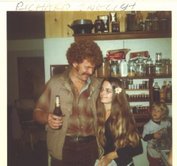
In 1972 and 1973 dwellers “in the boonies near and about Half Moon Bay, California� formed a food club which they called Farmers’ Feed. Members published a slender volume, the Farmers’ Feed Book, whose contents included recipes and articles on beekeeping, homemade animal feeds, companionate planting, goat-keeping, sprouts, chicken raising, and even a chicken vocabulary.

The introduction to the book said “Farmers’ Feed is a cooperative food purchasing and distributing group whose members live in the country south of Half Moon Bay, California. Almost our only common denominator is our countryness. Some of us are strict organic vegetarians and some secretly indulge in supermarket prepared foods in darkened attics. What unifies us is that we are all ex-urbanites come to roost in the same peaceful rookery. We make our living writing, breeding horses, teaching, drawing, building, filming, planning. This cookbook reflects our diversity. We hope you and your beasts enjoy our country table.�

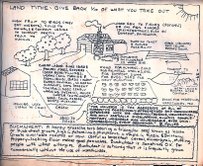
(Image: Land tithe, courtesy Mikie Benedict.)

The book urged a land tithe: Put back a tenth of what you take from the earth.

Contributors to the book were Suzanne White, Gene Fleet, Bryant Wollman, Valerie Hawes, Toni De Bari, Patrick Kitchen, Laurel Jernigan, Stanley Scholl, Barbara Freeman and Michaele Benedict.
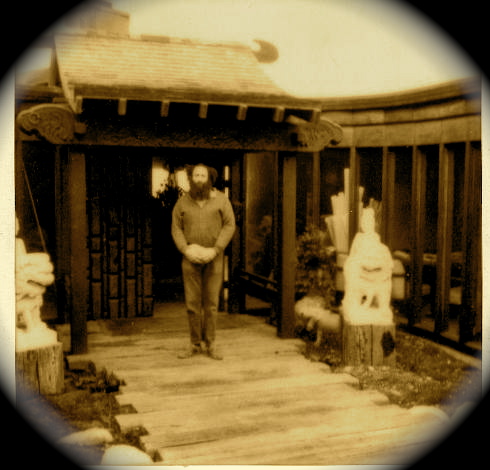
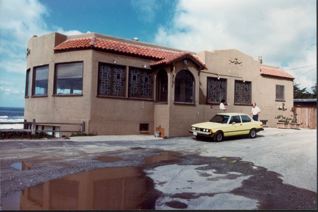
(Image: Bryant Wollman was a member of the Farmers’ Co-op. For many years he lived at rural Tunitas Creek and worked at the post office in Half Moon Bay. He is posing in front of the world-famous magician Channing Pollock’s home in Moss Beach, circa 1979. )

Advertisers and well-wishers were The Abalone Shop, Palace Ranch, Tunitas Glen Gardens, the Great White Whale Company, Hawes Place, Garret Gallery,
Hansel-Freeman Apple Works, the Water Works, Take 313, Ford Sunshine Company, and Ed Johnson, the Agricultural Extension Agent.

Farmers’ Feed members took turns shopping for bulk food items, mostly in Santa Cruz. In fall of 1972, they put on a theatrical production, “The Ballad of Spanishtown Sue�, first at the Hawes Ranch and later at the Bach Dancing and Dynamite Society.

————–

***Author Michaele Benedict lives in Montara. To read Mikie’s “Searching for Anna” website click here
Comments off

OceanStudio.org Goes to the Colorado River on a Real “Macho-Man” Adventure…

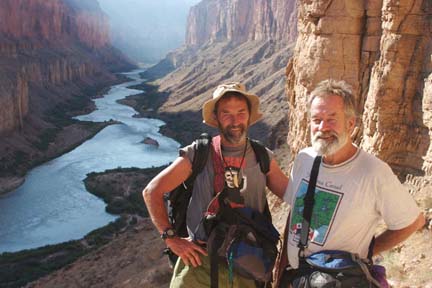
Photo: L-R Miramar Beach’s Michael Powers & former Coastsider Mark Fraser

For adventurers only click here

Comments off

Day dreaming through Moss Beach

This morning, early, I drove to Moss Beach, to the west side near the Fitzgerald Marine Reserve. I wanted to see if Charlie Nye’s “Reefs II” was still there, at Nevada & Beach Streets; I heard that the historic building was gone.

Even though you’d think it would be easy to keep in touch with the communities of Montara, Moss Beach, Princeton, El Granada and Miramar, it isn’t–you can go decades without seeing someone who used to be your best friend or your former next door neighbor.

You can also go for years without knowing if your favorite old building is still standing.

I think Coastsiders get lost in their neighborhoods. I do, in mine, in El Granada, living on an avenue created by the designer of the Ocean Shore Railroad’s “showplace.” I can stay here for days without seeing anybody and feeling very happy about it!

People who do not live on the Coastside have no idea how good life is here.

Just recently a lady who works for Bank of the West in Burlingame told me how amazed she was to find that there were such beautiful, intimate communities off Hwy 1.

Here’s the point of this post: I drove up to Moss Beach to see if Nye’s Reefs was still there and I ended up at Nevada & I forget what the cross-street was. I didn’t see Nyes where it used to be.

This is embarrassing: Maybe I didn’t end up on the right street–now I’m not sure. Guess I’ll have to go back up there and check it out again. But the Moss Beach I saw this morning was very different from the one I remember just a few years ago when there were still many 1920s-style bungalows around.

Today I saw much larger, affluent landscaped homes reminding me of how long it had been since I visited the west side of Moss Beach.

Comments off

Pasero-Patterson Duo Classical Guitar Recital: A Night To Remember At Miramar Beach

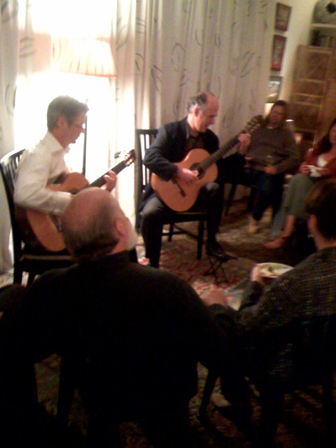
Friday night Burt and I were invited to hear a duo classical guitar recital at the Miramar Beach home of artist Linda Montalto-Patterson and her musicial-genius husband Richard Patterson. Richard was joined by acclaimed guitarist Stevan Pasero.

The fantastic sounds of the guitars took the rapt listeners on a musical adventure to South America; Brazil, Uruguay and Venezuela–to Cuba–and back to the USA with the standard jazz classic, “Sweet Georgia Brown,” and the melancholy folk song, “O Shenandoah.”

(Photo: Stevan Pasero, seated at left, Richard Patterson, at right.)

One of the final pieces Richard and Stevan performed to perfection came as a surprise, and as a nod to the generation of the guitarists’ guests–Led Zeppelin’s famous “Staircase to Heaven.”

At times, the exquisite technical skills of the musicians stunned the audience.

Being there reminded me of how tight-knit the Miramar Beach community is. It always has been. Many of the guests lived on the “strip”, Mirada Road, overlooking the Pacific Ocean. Some were old friends I hadn’t seen in many years–which was a delight as well.

A perfect evening at Miramar Beach.

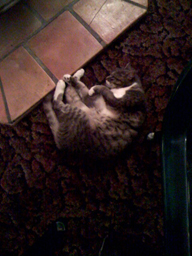
(Image of the Patterson’s cat)

For more info about Richard Patterson’s music click here

Comments off

Thank You Botta’s Auto Body

at 3536 Sacramento St. in San Francisco for finding a personal receipt of mine on the street in front of their shop–and mailing it back to me!

How often does that happen?

[By the way, the west end of Sacramento Street is a fun place to walk and look into all the new stores.]

Comments off

1970s: Full Moon Over The Moss Beach Distillery

As told to me by Bruce Pine.

In an earlier incarnation, the Moss Beach Distillery was known as the Galway Bay Inn. Very Irish. Napkins with four leaf clovers. Pleasant Sunday brunches.

And the link to Ireland via the Galway Bay Inn was kind of a throwback for Moss Beach–in the 1890s the Coastside resort, popular for its marine curiosities, became home to the John Kyne family, who were Irish to their core.

But when the Moss Beach Distillery was originally built in the late 1920s, it was named after Frank, the Peruvian owner– and the comings and goings at the roadhouse during Prohibition earned the place fame and notoriety. There were sightings of silent film stars, of San Francisco politicians, too.

In the 1970s three businessmen, Paul, Sam and Dave purchased the Galway Bay Inn, with its Irish theme, with plans of returning the restaurant to its Prohibition theme. Dave even tracked down the stained glass windows that had never been picked up from the artist who custom- made them for Frank’s classic bar.

As a final touch, the trio placed a vintage “still” outside the restaurant but according to my sources, the authorities called it illegal and made them move it elsewhere.

In the 1970s–when there wasn’t much construction on the isolated Coastside– the Distillery was a comfortable place to dine and enjoy drinks at the bar. The owners recognized the importance of being on the premises–especially Dave, who often bartended, and knew the names of all the locals.

I think it was Sam who had family in Marin County and inherited a 1936 Pierce Arrow, the very epitome of the “gangster car.” The Pierce Arrow was very cool but it didn’t run ; it needed work and had to be towed down to Half Moon Bay– and eventually to Bruce Pine’s place known as the “Windmill House” on Potter Street. Bruce possessed the skills and talent to get the vintage automobile running.

Sam had a plan for the Pierce Arrow’s future home–when it was all fixed up, he wanted to park the antique in front of the restaurant.

It was going to take a while to get the car in good shape. Meanwhile Sam told Bruce that whenever he was taking the Pierce Arrow out for a “test drive, ” he should tool on up to the Distillery. That happened a few times. Bruce would call Sam at the Distillery and tell him he was taking the 1936 Pierce Arrow out for a test drive to Moss Beach.

As soon as Sam knew the car was coming, he had to make sure that the space was clear in front of the Distillery, that no one else had parked their car there–the spot in front of the Distillery was considered a prestige parking space, announcing to all of Moss Beach who was inside.

Meanwhile the photographer Jerry Koontz had been renting a room at Bruce Pine’s “Windmill House” in Half Moon Bay. It was the 1970s; the old order was breaking down. Playgirl Magazine had been founded in 1973 and a local publishing company (consisting of several women, more on that later) decided to shoot male nudes for a calendar and a deck of playing cards. At the time shooting male nudes for a calendar was a big shock and the company had a hit on their hands. Jerry Koontz, sans clothing, appeared on one of the playing cards.

Jerry’s experience had been heady, the brush with fame; he was feeling bold and ready for an adventure when he and his girlfriend jumped into the back seat of the 1936 Pierce Arrow that Bruce was driving to the Distillery.

Truth be told, there was mischief in Jerry’s eyes.

As usual Sam cleared the space in front of the Distillery and Bruce parked the gangster car there.

Suddenly, without warning, Jerry and his girlfriend shed their clothes, jumped out of the car and, stark naked, the two of them streaked through the dining room, startling everyone; they made a quick dash through the crowded bar as heads turned to watch them run out the front door, and into the 1936 Pierce Arrow for a quick getaway with Bruce Pine at the wheel.

“Those were fun times,” Jerry Koontz told me the other day. Indeed.

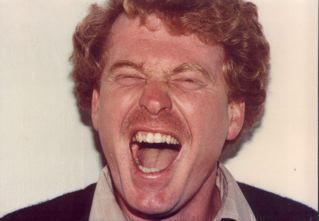
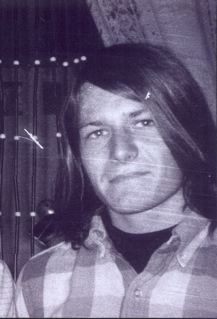
(Image: Jerry Koontz)

Comments off

…. I have A New Book Coming Out…Not just about Princeton, Miramar Beach, too

The cover photo was shot at the original Hazel’s Seafood in Princeton-By-The-Sea (the site of Barbara’s FishTrap today).

That’s one of the “Hazels” [there were two!] at the far left, wearing the apron. Wait ’til you see the photos inside the book…I was lucky to get some very cool vintage pix. Contributing great images, some more contemporary, are a few of the Coastside’s well known photographers including Jerry Koontz, Michael Wong and Ed Davis.

For more info, click here
or here

Comments off

Butterflies of Love….from Invisible Beach, South Coast

(Photo by John Vonderlin)

Comments off

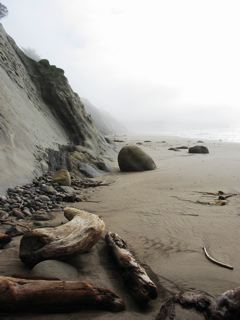
The South Coast’s Invisible Beach

See the rock that looks like a whale?

(Photo by John Vonderlin). Read more of John’s [his friends call him "Dr. Science"] work here

and here

Comments off

1957: Planning The Future From Montara to HMB Airport

 When there was a Denton’s Coffee Shop at Cabrillo Hwy & 7th Street in Montara and the Cunha Bros. owned the Chevron Station in Half Moon Bay.

A Curio From the Half Moon Bay Review, 1957

“General Plan for Montara-Moss Beach Revealed By County Planning Commission; Growth Depends on Coast Freeway

“A general plan proposal for the Montara Moss Beach communities was made public recently by the County Planning Committeer.

“The plan, which was developed jointly by the commission staff and the community planning committee of the Montara Moss Beach Improvement Association during a one-year study covers the area from Devil’s Slide to Half Moon Bay airport.

“A population of from 11,500 to 17,000 by 1980 is expected for the area and an eventual population of from 28,000 to 43,000 is projected.

“The major design concepts are emphasized in the plan. The first is that of  a recreation-oriented community with stress being placed on preservation of the natural beautifies of the area. Open space, parks, green belts, parkways, and riding and hiking trails are shown.

“The second planning concept is a commercial complex adjoining the airport to include a community shopping center, hotels and motels, convention center and computer center.

Another outstanding feature of the proposed plan is a cultural recreation center which would serve as a focal point for the community. It is shown on the rise north of Montara creek near an extension of Fourteenth Street. The site overlooks Montara Canyon, the ocean and a possible new recreation lake on Montara Creek.

“The plan shows three golf courses, industry along Airport Street and residential areas along the ridge behind the airport.

“Larz Anderson, assistant planning director, said the plan provides the framework in which the vast [Henry] Doelger development, announced last week, will take place. Doelger planners kept in touch with the work on the general plan, Anderson said, with the result that there are no major conflicts between the plan and what Doelger proposes to do.

“Anderson said the growth of the area is expected to be somewhat gradual until the Coast freeway [in 1957, a proposed extension of Hwy 280] becomes reality.�

Comments off

Grasses…

(Photo by Leon Kunke)

Comments off

Pillar Point, this morning…very warm….

Comments off

Montara Artist Howard Gilligan & Mikie Benedict

Free lance writer/pianist Mikie Benedict lives in the historic Montara home that belonged to artist Howard Gilligan–one of the Artist’s Colony homes that in the 1920s was known as the Von Suppe Poet & Peasant Cottage.

(Howard Gilligan, self-portrait, 1945. Courtesy Mikie Benedict.)

Howard Gilligan by Mikie Benedict

Howard Gilligan was just about my best friend in the world, and I think I could tell you almost anything about him. After he died in 1988, I tried to make sense of his photographs…no dates, no names…and actually managed to put together an album.

He was a working artist to the very end. I delivered several commissioned works after Howard passed away and have many paintings he did for me. The Montara Post Office once had an exhibit of Howard’s StampArt.

(Photo: Howard Gilligan’s exhibit at the Montara Post Office.)

He did wonderful paintings on envelopes, incorporating the stamps, and for a long time the PO would send them that way. He even sent one of these to the actress Lillian Gish and she wrote a couple of letters to him. Finally, though, the PO said he had to put the paintings inside the envelope, not outside. I must have fifty of these little masterpieces which came through the mail, even though I only lived across the street.

Howard did album covers for Orion, which sent him lots of their new releases to get his feedback. He was terribly knowledgable about music and had very sophisticated taste ranging from ultra-modern right back to Bach, probably his favorite. He was the sweetest man, loyal, funny, dear, and he had a wonderful life in Montara without being sick a day in his life until his 50-year companion, Bob Esberger, died at the age of 97 in 1986.

———————–
On January 16, 1973, Mikie Benedict’s five-year-old daughter, Anna

vanished from her Purisima* home. The child has never been seen or heard from again–but the case remains open. Can you help? For more information, click here

and here

————–

*Purisima Canyon: (The wooded canyon of Purissima creek above the Higgins road turnoff. The name apparently came into use about 1870. –Place Names of San Mateo County by Dr. Alan K. Brown (SMCHA, 1975)

**Purissima Creek: By 1786 the missionaries from San Francisco were calling the village “the place of ‘la Purma’ (Purissima, the Most Pure, or Immaculate); records of the following year mention the ‘arroyo de la Purissima’. Some records of the 1840s use a modernized Spanish spelling, Purisima.

Before 1870 the commonest American spelling was Purissimo. Since 1901, official maps have used the spelling Purisima, in accordance with a dictate of the US Geographic Board; but this has never gained much local currency, probably because it is likely to lead to mispronounciation.–Place Names of San Mateo County by Dr. Alan K. Brown (SMCHA, 1975)

Comments off